
As a Senior Product Designer at Zelus, I led the design of a mobile-first Web3 Super App that unified cryptocurrency management with digital asset galleries. Working in a tight-knit team alongside one other designer and a dedicated user researcher, I helped dismantle the Complexity Wall of blockchain technology.
My key contributions included co-authoring the Zyztem design system, integrating advanced security features like Blowfish, and pioneering iOS Live Activities to improve transaction transparency, transforming a technical tool into a secure, consumer-grade experience.

The Zelus Wallet was envisioned as the definitive bridge between traditional digital experiences and the emerging decentralized landscape of Web3. At a time when the crypto market was saturated with complex, developer-centric tools, our mission was to build a comprehensive Super App that allowed mainstream users to buy and manage cryptocurrency alongside high-fidelity digital assets like music, video, and art NFTs. By prioritizing human-centered design over technical jargon, we aimed to create an ecosystem where a single email address served as the key to a multi-chain world.
As a Senior Product Designer, I was responsible for transforming high-stress blockchain interactions into a seamless and secure consumer journey. This involved co-authoring Zyztem, our proprietary design system characterized by a bold dark purple and orange neon aesthetic, which provided the visual foundation for our cross-platform expansion. My work focused on abstracting the complexity of the blockchain through intuitive onboarding flows, real-time transaction transparency, and proactive security measures.
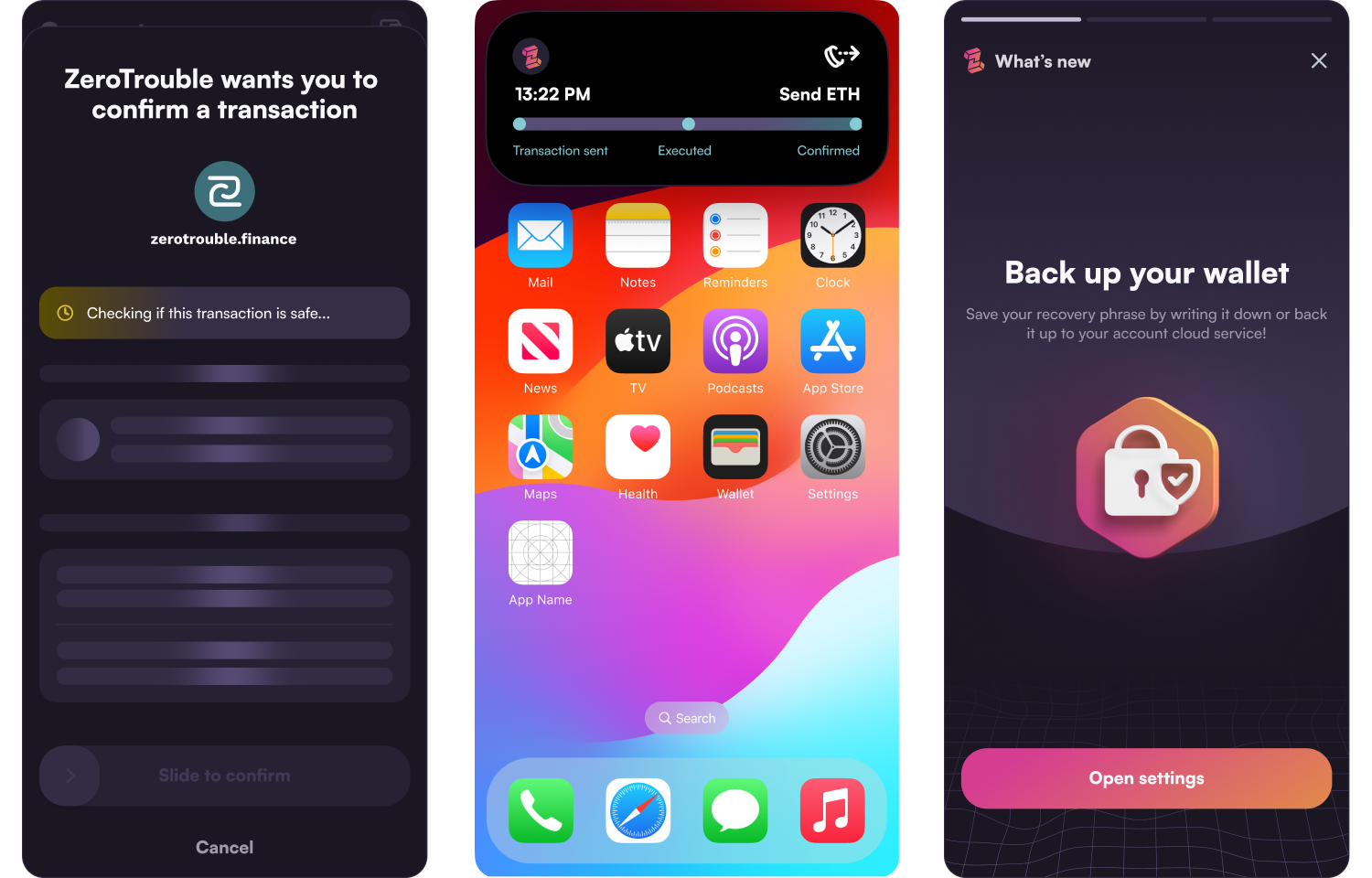
The primary challenge was to design a wallet that was not just a functional utility but an approachable, educational gateway into Web3. At the time, the market lacked a unified solution that could seamlessly combine rigorous crypto management with a high-fidelity NFT viewer.
Users were often forced to juggle multiple apps to view their digital collectibles or buy assets, creating a fragmented and intimidating experience.
Our mission was to eliminate this friction by building a user-friendly ecosystem that felt as intuitive as a social media app, guiding novices through the complexities of blockchain ownership while providing a rich, native media experience for their digital assets.
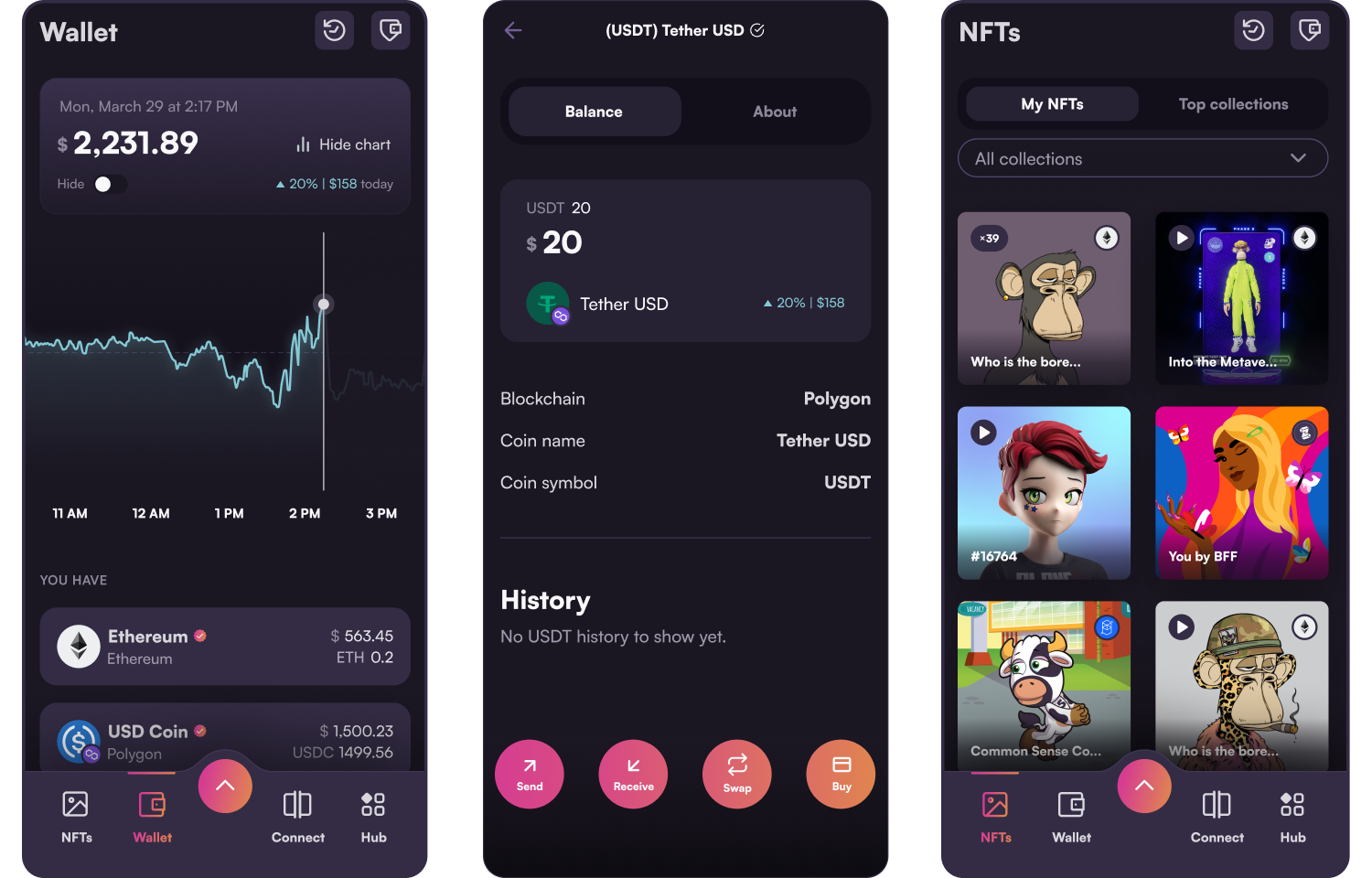
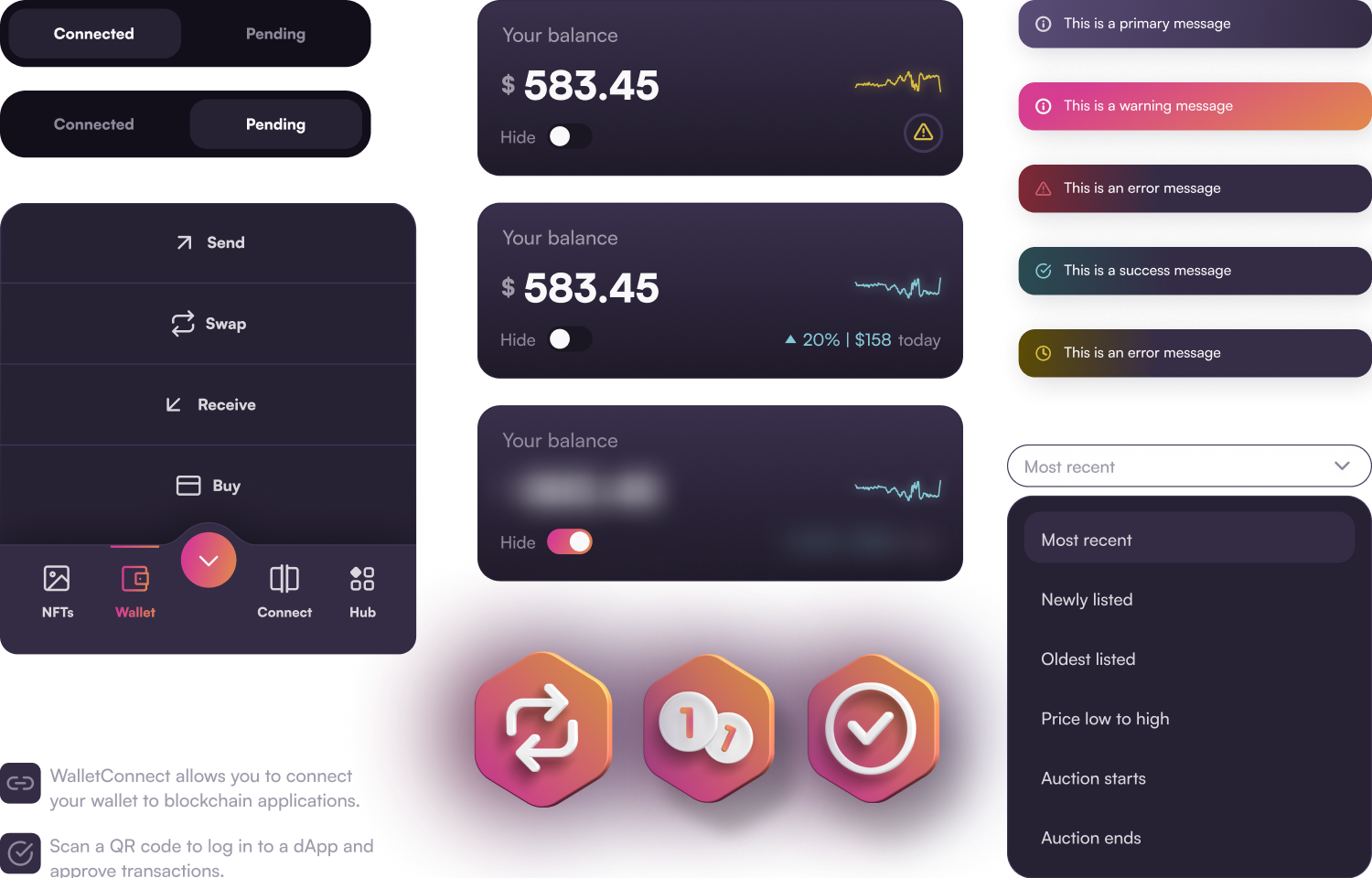
To support a rapidly evolving product, I co-developed Zyztem, a scalable design system that served as the backbone for the Zelus ecosystem. Collaborating closely with my fellow designer, we deliberately chose a dark purple and orange neon visual direction to strike a balance between the high-energy culture of the NFT space and the professional reliability of a fintech app.
This bold palette wasn't just an aesthetic choice; it allowed us to use high-contrast accents to guide the user’s eye toward critical actions, such as confirming a transaction or securing a recovery phrase.
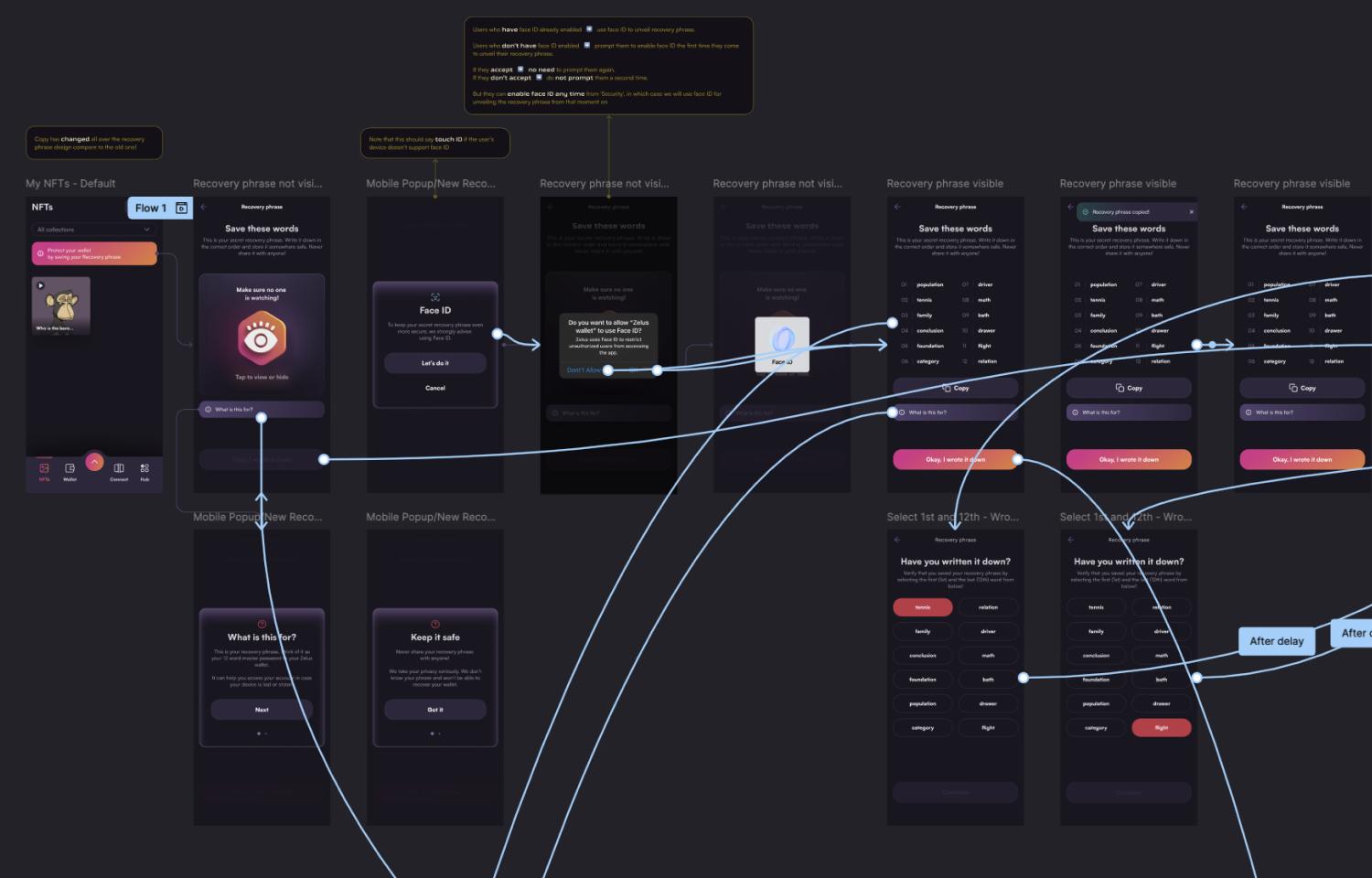
As a Senior Designer, I ensured that every feature was rooted in user evidence rather than just aesthetic trends. Working side-by-side with our dedicated researcher, we conducted both quantitative and qualitative testing to validate our hypotheses.
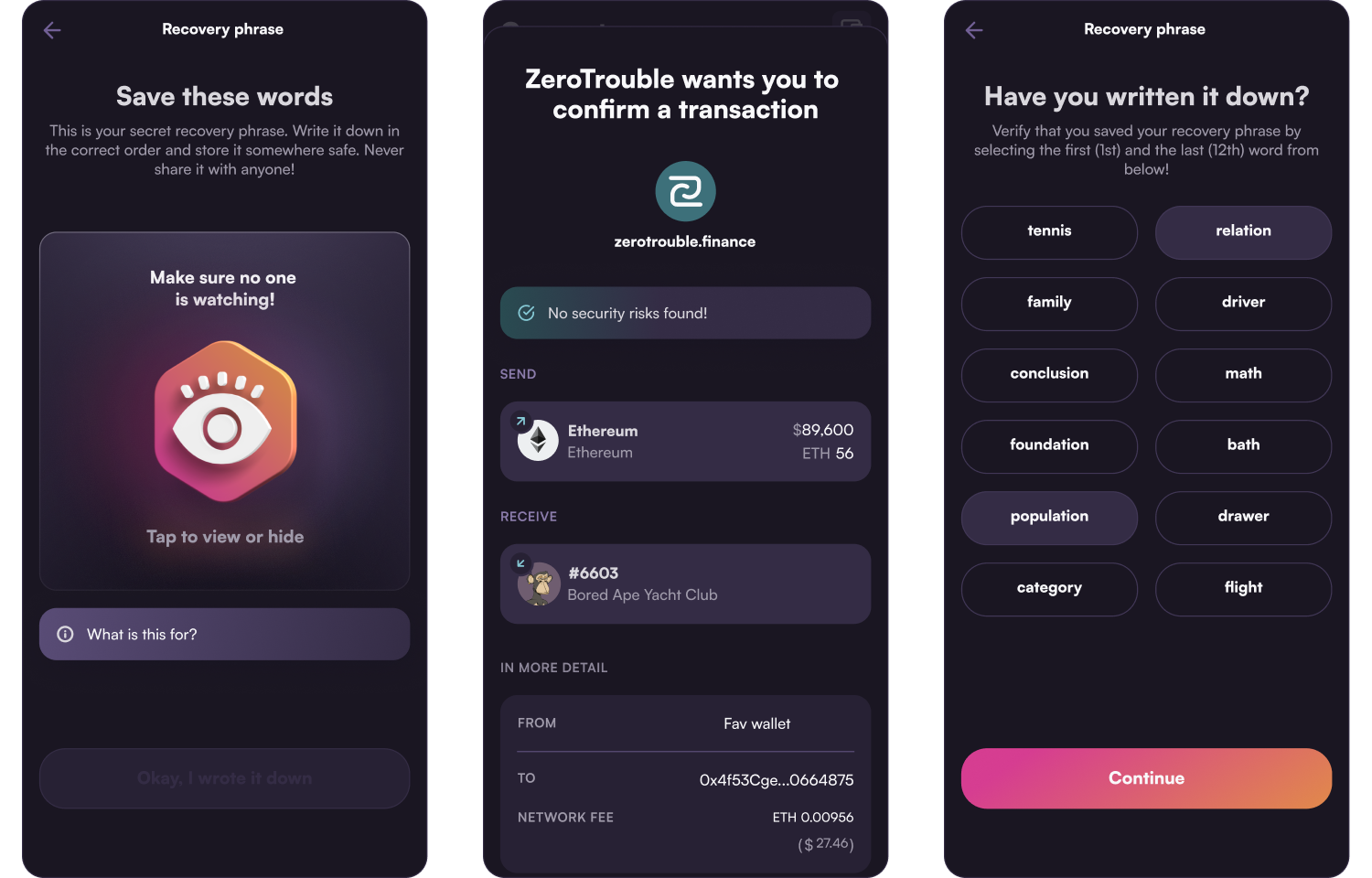
We ran usability sessions with real users and test groups to identify exactly where they felt lost in the Web3 onboarding funnel. Because this was a native mobile app, I built high-fidelity prototypes for every major feature, allowing us to test complex interactions, like the verification flow and recovery phrase setup, before a single line of code was written.
This iterative loop of prototyping and testing ensured that the final designs were battle-tested and optimized for the highest possible conversion rates.
The scope of my work extended into the deeper technical layers of the app, where I worked hand-in-hand with the engineering team to design the integration for Wallet Connect. This allowed our users to bridge their Zelus wallet with external dApps seamlessly, significantly speeding up the process of purchasing NFTs or interacting with decentralized platforms. To further lower the barrier to entry, I designed a social signup flow, allowing users to create a secure wallet using existing social identities, effectively removing the intimidating technical barriers that stop most new users at the front door.
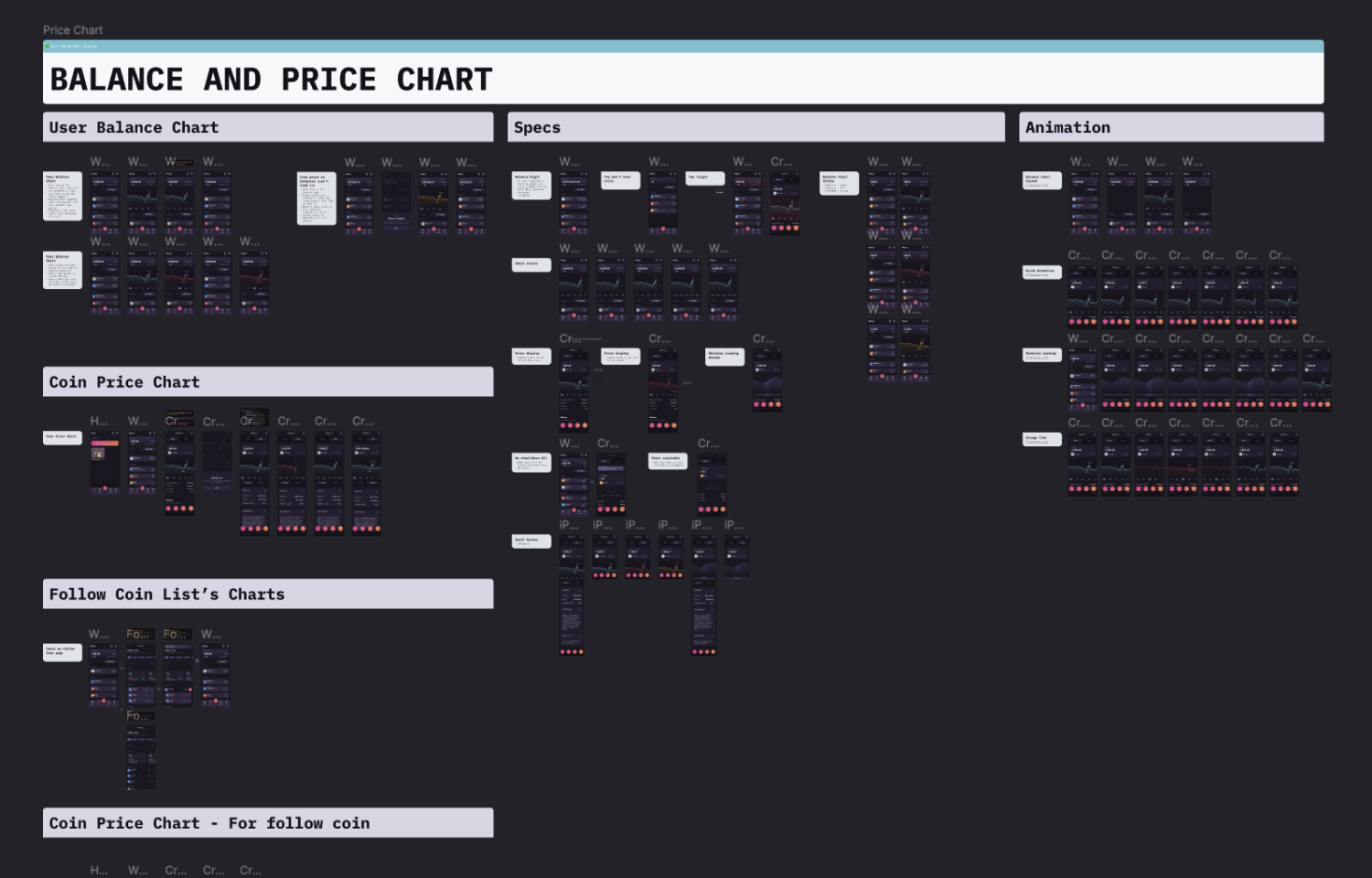
I also led the redesign of the Home Screen to create a more visually appealing and organized command center. This included the implementation of a Hide Balance feature, a critical privacy tool for users who wanted to check their NFT gallery in public spaces without exposing their financial holdings. Working in a native app environment required constant communication with the mobile developers to ensure that my designs for features like Wallet Stories, Bottom Navigation and Verification flows were technically feasible while maintaining a premium user experience.
Trust is the most valuable currency in Web3, so we implemented several features to protect users. One of the most significant integrations was Blowfish, a security layer that analyzed every transaction before it was signed. To make this data digestible, I designed a clear visual hierarchy that flagged potential risks. Instead of showing raw code, the UI communicated safety in plain language, allowing users to move forward with confidence or halt a dangerous interaction.
Because blockchain transactions can often take time to process, I utilized iOS Live Activities to eliminate the anxiety of waiting. This feature allowed users to see the real-time status of their assets, moving from Sent to Executed to Confirmed, directly on their lock screen. This level of transparency reduced the need for users to constantly refresh the app and provided a sense of calm and control during what is traditionally the most stressful part of the crypto experience.
The impact of our user-centered design approach was measurable across both adoption and usability metrics. At its peak, the Zelus wallet successfully supported an ecosystem of 40,000 active users, proving the system's ability to scale while maintaining performance.
Through our rigorous testing cycles, we confirmed a significantly higher task completion confidence among non-technical users, validating our efforts to make the blockchain approachable.
Furthermore, by consolidating the fragmented Web3 experience into a unified bottom navigation, we reduced navigation complexity by approximately 30%, allowing users to find and manage their assets significantly faster than in traditional wallet architectures.
Over the past few years, I have assisted clients from various industries, including Web3, HR, E-commerce, Government, Fashion, Technology, and many more.


